Choosing Between Toughened and Laminated Safety Glass: A South African Specification Guide
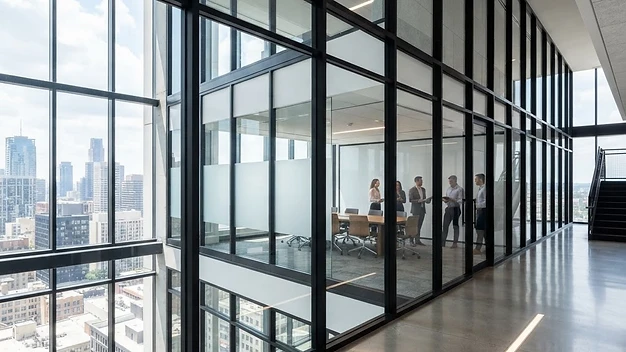
Understand the functional differences between toughened and laminated safety glass to ensure your projects meet SANS 10400 safety requirements.
Choosing the correct glass type is the most critical decision in fenestration, balancing occupant safety with structural integrity. In the South African context, SANS 10400-N dictates specific safety glass requirements for windows, doors, and shopfronts based on human impact risk. Misidentifying the requirements can lead to failed building inspections and, more importantly, significant safety hazards. Both toughened and laminated glass are classed as safety glass, but they behave fundamentally differently under stress.
The Engineering of Toughened Safety Glass
Toughened (or tempered) glass is produced by heating standard annealed glass to approximately 650°C and then rapidly quenching it with forced air. This process puts the surface into high compression and the core into tension, making the glass four to five times stronger than standard float glass of the same thickness. It is highly resistant to thermal stress and surface scratches.
The critical factor with toughened glass is the failure mode. When it reaches its breaking limit, it shatters into thousands of small, relatively blunt granules. This prevents the large, razor-sharp shards that make annealed glass so dangerous. However, toughened glass cannot be cut, ground, or drilled once tempered; all processing, including edge work and hole cutting for hinges, must be completed before the heat treatment process begins.
The Mechanics of Laminated Safety Glass
Laminated glass consists of two or more sheets of glass bonded together with a flexible interlayer, typically Polyvinyl Butyral (PVB). If the glass is struck with significant force, the interlayer holds the fragments together, preventing the glass from falling out of the frame or creating a hole. This makes it an ideal solution for areas requiring high security or fall protection.
Because the interlayer acts as a continuous membrane, laminated glass is the standard choice for overhead glazing, balustrades, and high-traffic areas. Beyond safety, the PVB interlayer offers acoustic dampening properties and filters out up to 99% of UV radiation, protecting interior furniture and finishes from fading. Unlike toughened glass, laminated glass can be cut on-site, though edge sealing is required to prevent moisture ingress that might cause delamination of the PVB layer.
Application and Performance Comparisons
When specifying glass, consider the functional performance required for the aperture. Laminated glass is superior for security, as it requires significant mechanical effort to breach, whereas toughened glass is often preferred for high-load structural applications where extreme surface strength is needed.
- Overhead Glazing: Laminated glass is mandatory for skylights to prevent falling debris in the event of breakage.
- Balustrades: Laminated toughened glass is often the gold standard here, providing both the strength of tempering and the security of the interlayer.
- Shopfronts: Toughened glass is common, but laminated should be used for ground-floor security windows to deter smash-and-grab attempts.
- Acoustic Control: Laminated glass provides a superior sound-reduction index compared to equivalent monolithic toughened units.
Practical Guidance for Buyers and Contractors
When budgeting for your project, remember that laminated glass typically carries a price premium compared to toughened glass of the same thickness due to the material and labor costs of the bonding process. For a standard 6.38mm laminated sheet, expect to pay approximately 25-40% more than 6mm toughened glass.
Before ordering, always check your glazing schedule against the SANS 10400-N impact zone maps. If a glass pane is located within 300mm of a door or below 800mm from a floor level, it must be safety glass.
When ordering glass for site installation, remember that while 6.38mm laminated glass can be trimmed slightly, it is best practice to provide exact dimensions to the factory. If you are handling large panes, ensure that you use mechanical suction lifters, as improper handling of the edges—especially on toughened glass—can cause spontaneous breakage at the edge zones where the internal tension is highest. Always verify that the glass edge finish is appropriate for the framing system; a 'clean cut' edge may be sufficient for some aluminium channels, but exposed edges in balustrades require polished, arrised finishes for safety and aesthetics.